

Zakat Rules and Calculation A Complete Guide for Muslims

The Purpose of Zakat (Purification & Growth)
“Take from their wealth a charity by which you purify them and cause them increase, and invoke Allah’s blessings upon them. Indeed, your prayer is a source of comfort for them. And Allah is All-Hearing, All-Knowing.”
— Surah At-Tawbah (9:103)
Arabic:
خُذْ مِنْ أَمْوَالِهِمْ صَدَقَةً تُطَهِّرُهُمْ وَتُزَكِّيهِم بِهَا وَصَلِّ عَلَيْهِمْ ۖ إِنَّ صَلَاتَكَ سَكَنٌ لَّهُمْ ۗ وَاللَّهُ سَمِيعٌ عَلِيمٌ
Zakat Rules and Calculation
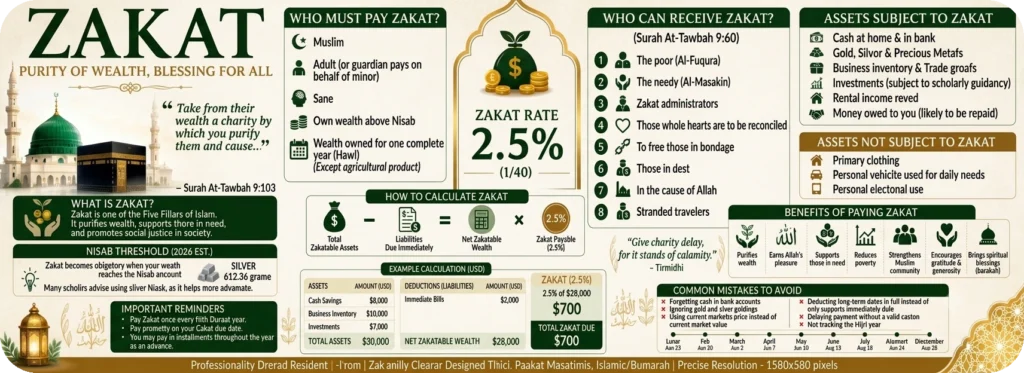
Zakat is one of the Five Pillars of Islam and is an obligatory act of worship for every eligible Muslim. It purifies wealth, supports those in need, and promotes social justice.
Allah says:
“Take from their wealth a charity by which you purify them and cause them increase.”
(Surah At-Tawbah 9:103)
What is Zakat?
The Arabic word Zakat (الزكاة) means:
- Purification
- Growth
- Blessing
By paying Zakat, Muslims purify their wealth and fulfill one of the most important obligations in Islam.
Who Must Pay Zakat?
A Muslim must pay Zakat if they meet all of the following conditions:
- Muslim
- Adult (or according to many scholars, wealth owned by a minor may also be subject to Zakat through a guardian)
- Sane (scholarly differences exist regarding certain cases)
- Own wealth above the Nisab threshold
- Possess that wealth for one complete lunar (Hijri) year (Hawl), except for some assets such as agricultural produce which have different rules
Allah’s Direct Command to Establish Prayer and Pay Zakat
وَأَقِيمُوا الصَّلَاةَ وَآتُوا الزَّكَاةَ ۚ وَمَا تُقَدِّمُوا لِأَنفُسِكُم مِّنْ خَيْرٍ تَجِدُوهُ عِندَ اللَّهِ ۗ إِنَّ اللَّهَ بِمَا تَعْمَلُونَ بَصِيرٌ
“And establish prayer and give Zakat, and whatever good you put forward for yourselves—you will find it with Allah. Indeed, Allah is Seeing of what you do.”
— Surah Al-Baqarah (2:110)
وَأَقِيمُوا الصَّلَاةَ وَآتُوا الزَّكَاةَ وَأَطِيعُوا الرَّسُولَ لَعَلَّكُمْ تُرْحَمُونَ
“And establish prayer and give Zakat and obey the Messenger so that you may receive mercy.”
— Surah An-Nur (24:56)
What is Nisab?
Nisab is the minimum amount of wealth a Muslim must own before Zakat becomes obligatory.
It is based on either:
- 87.48 grams of gold
- 612.36 grams of silver
Many scholars advise using the silver Nisab, as it generally benefits more people in need by making more Muslims eligible to pay Zakat.
Since gold and silver prices change daily, the Nisab value also changes.
Zakat Rate
The standard Zakat rate is:
2.5% (1/40)
This applies to:
- Cash
- Savings
- Gold
- Silver
- Business inventory
- Investments (subject to scholarly guidance depending on the investment type)
How to Calculate Zakat
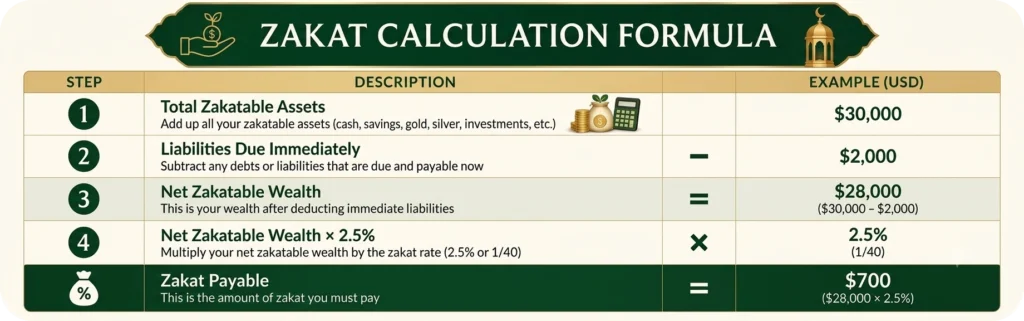
Use this simple formula:
Total Zakatable Assets
− Liabilities Due Immediately
= Net Zakatable Wealth
Net Zakatable Wealth × 2.5%
= Zakat Payable
Assets Subject to Zakat
Include:
- Cash at home
- Bank balances
- Gold jewelry (according to many scholars; there is a scholarly difference regarding personal jewelry)
- Silver
- Business inventory
- Trade goods
- Investment funds (depending on the type)
- Rental income that has been saved
- Money owed to you that is likely to be repaid
Assets Not Subject to Zakat
Generally excluded are:
- Your primary residence
- Personal clothing
- Household furniture
- Personal vehicle used for daily needs
- Food for personal use
- Personal electronics
- Tools used for work
Example Zakat Calculation
Suppose you own :
| Asset | Amount |
|---|---|
| Cash Savings | $8,000 |
| Gold Value | $5,000 |
| Business Inventory | $10,000 |
| Investments | $7,000 |
| Total Assets | $30,000 |
Liabilities due now:
| Liability | Amount |
|---|---|
| Immediate Bills | $2,000 |
Net Wealth:
$30,000 − $2,000
= $28,000
Zakat:
$28,000 × 2.5%
= $700
Total Zakat Due: $700
Who Can Receive Zakat?
The Quran (Surah At-Tawbah 9:60) identifies eight categories of eligible recipients:
- The poor (Al-Fuqara)
- The needy (Al-Masakin)
- Zakat administrators
- Those whose hearts are to be reconciled
- To free those in bondage
- Those in debt
- In the cause of Allah
- Stranded travelers
Who Cannot Receive Zakat?
Generally, Zakat should not be given to:
- Parents and grandparents whom you are obligated to support
- Children and grandchildren whom you are obligated to support
- Your spouse
- Wealthy individuals who do not qualify
- Those who use wealth for unlawful purposes
When Should You Pay Zakat?
You should pay Zakat:
- Once every Hijri (lunar) year
- As soon as your Zakat anniversary arrives
- Without unnecessary delay after it becomes due
Many Muslims choose Ramadan due to its blessings, but Zakat is due whenever your personal Zakat date arrives.
Gold Zakat
If your gold reaches the Nisab and has been owned for one lunar year, Zakat is generally due.
Example:
Gold value:
$12,000
Calculation:
$12,000 × 2.5%
= $300
Cash Zakat
If your savings remain above the Nisab for one lunar year:
Savings:
$15,000
Calculation:
$15,000 × 2.5%
= $375
Business Zakat
Business owners should calculate Zakat on:
- Inventory intended for sale
- Cash
- Receivables expected to be collected
After deducting immediate liabilities, pay 2.5% on the remaining Zakatable amount.
Common Mistakes When Calculating Zakat
- Forgetting cash held in bank accounts
- Ignoring gold and silver holdings
- Using market purchase price instead of the current market value where applicable
- Deducting long-term debts in full instead of only amounts immediately due (scholarly views vary)
- Delaying payment without a valid reason
- Not tracking the Hijri year
Benefits of Paying Zakat
- Purifies wealth
- Earns Allah’s pleasure
- Supports those in need
- Reduces poverty
- Strengthens the Muslim community
- Encourages gratitude and generosity
- Brings spiritual blessings (barakah)
Frequently Asked Questions
Is Zakat obligatory every year?
Yes. If your wealth remains at or above the Nisab on your annual Zakat date, Zakat is due each Hijri year.
Is there Zakat on salary?
Not on the salary itself when earned. However, savings from your salary that remain above the Nisab for one lunar year become subject to Zakat.
Can I pay Zakat monthly?
Yes. You may pay in installments throughout the year as an advance, provided the total due is paid by your Zakat due date.
Is there Zakat on a house?
Your primary residence is generally not subject to Zakat. Property held for trade or resale may be subject to different rulings.
Is jewelry subject to Zakat?
There is a well-known difference of opinion among scholars regarding personal gold and silver jewelry. Many scholars require Zakat on qualifying gold and silver jewelry, while others exempt jewelry used for personal adornment. Consult a qualified scholar if you follow a particular school of jurisprudence.
Reward for Spending in the Way of Allah
“The example of those who spend their wealth in the way of Allah is like that of a grain which grows seven ears; in every ear are a hundred grains. And Allah multiplies His reward for whom He wills. And Allah is All-Encompassing, All-Knowing.”
— Surah Al-Baqarah (2:261)
Arabic
مَّثَلُ الَّذِينَ يُنْفِقُونَ أَمْوَالَهُمْ فِي سَبِيلِ اللَّهِ كَمَثَلِ حَبَّةٍ أَنبَتَتْ سَبْعَ سَنَابِلَ فِي كُلِّ سُنبُلَةٍ مِّائَةُ حَبَّةٍ ۗ وَاللَّهُ يُضَاعِفُ لِمَن يَشَاءُ ۗ وَاللَّهُ وَاسِعٌ عَلِيمٌ
This format is ideal for a website, infographic, or social media post about the virtues of Zakat and charitable giving.
Conclusion
Zakat is a sacred obligation that purifies wealth, strengthens faith, and helps build a compassionate society. Understanding the Nisab, identifying Zakatable assets, calculating 2.5% correctly, and giving to eligible recipients ensures this pillar of Islam is fulfilled properly. Reviewing your wealth each Hijri year and paying Zakat promptly allows you to meet your religious duty while supporting those most in need.
Who Is Eligible to Receive Zakat?
“Zakat expenditures are only for the poor, the needy, those employed to collect it, those whose hearts are to be reconciled, for freeing those in bondage, for those in debt, for the cause of Allah, and for the stranded traveller—an obligation from Allah. And Allah is All-Knowing, All-Wise.”
— Surah At-Tawbah (9:60)
Arabic
إِنَّمَا الصَّدَقَاتُ لِلْفُقَرَاءِ وَالْمَسَاكِينِ وَالْعَامِلِينَ عَلَيْهَا وَالْمُؤَلَّفَةِ قُلُوبُهُمْ وَفِي الرِّقَابِ وَالْغَارِمِينَ وَفِي سَبِيلِ اللَّهِ وَابْنِ السَّبِيلِ ۖ فَرِيضَةً مِّنَ اللَّهِ ۗ وَاللَّهُ عَلِيمٌ حَكِيمٌ
The Eight Categories of Zakat Recipients
- The Poor (Al-Fuqarā’) – Those who have little or no wealth.
- The Needy (Al-Masākīn) – Those whose income does not meet their basic needs.
- Zakat Administrators – Those appointed to collect and distribute Zakat.
- Those Whose Hearts Are to Be Reconciled – Individuals whose hearts are inclined toward Islam or whose support benefits the Muslim community.
- Those in Bondage – For freeing captives or slaves.
- Those in Debt (Al-Ghārimīn) – People burdened by legitimate debts they cannot repay.
- In the Cause of Allah (Fī Sabīlillāh) – Eligible causes that serve the religion and benefit the Muslim community.
- The Stranded Traveller (Ibn As-Sabīl) – A traveller who lacks the means to continue the journey or return home.
This verse outlines the eight categories of people eligible to receive Zakat, providing clear guidance on its rightful distribution according to the Qur’an.
— Surah At-Tawbah (9:60)
This gives the section a clean, professional appearance suitable for a Zakat guide or Islamic educational website.
Note
Because the prices of gold and silver change every day, the Nisab amount also changes daily. Always calculate your Nisab using the current market price in your country’s currency on your Zakat due date. This ensures your Zakat obligation is accurate and in accordance with Islamic guidance.