

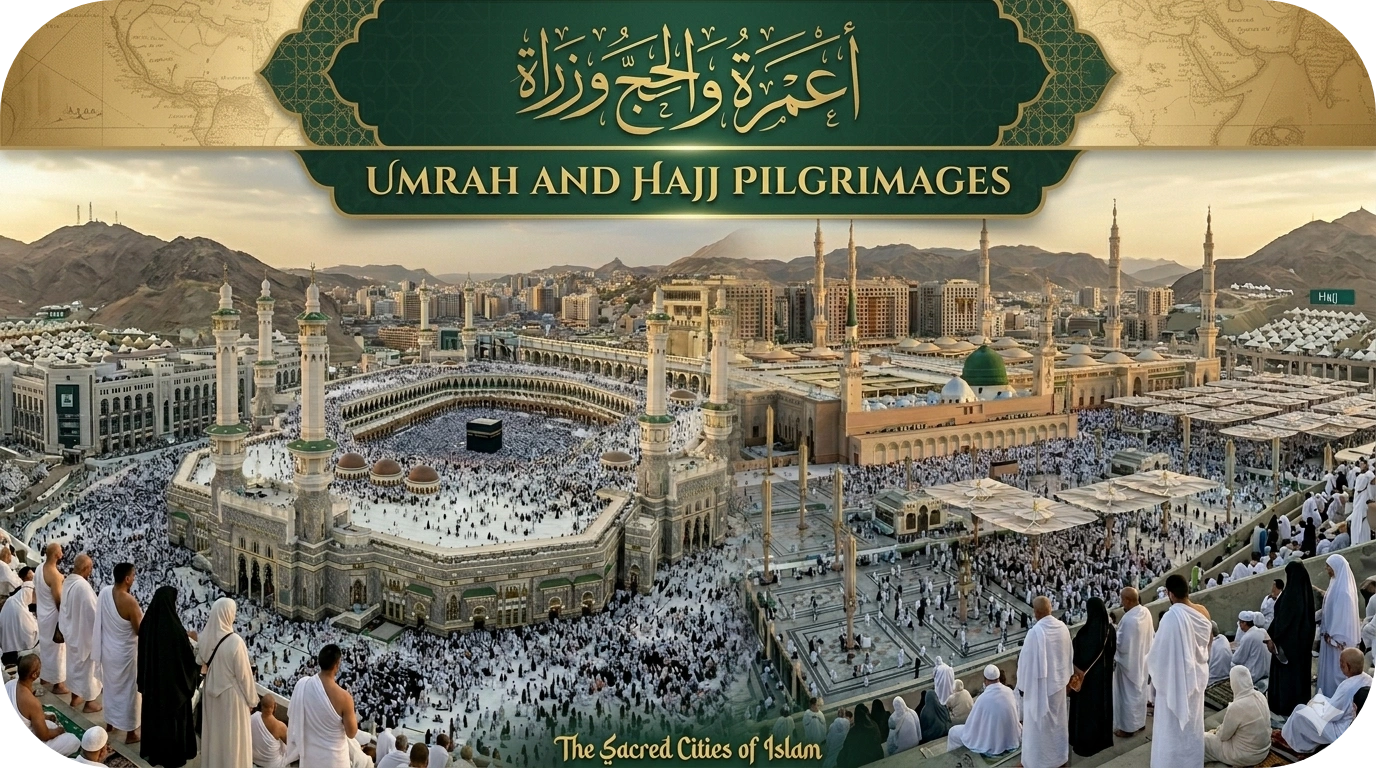
Umrah & Hajj عُمْرَة حَجّ Only book through officially licensed Association Agencies

How to Avoid Fake Hajj and Umrah Agents
Planning your Hajj or Umrah journey is a sacred and emotional experience. However, many scammers take advantage of pilgrims through fake agencies, especially on social media platforms. To stay safe, always use official and verified booking channels like the Nusuk App or government-registered travel operators.
Fraudsters often promote “cheap packages” on platforms like Facebook and Instagram, aiming to steal money from unsuspecting pilgrims. Staying informed and cautious is essential.
Precautions to Avoid Fake Agents
Verify Licenses
Always confirm that the travel agent is officially licensed by your country’s Ministry of Hajj or authorized to work with Saudi authorities.
Use Official Channels
For international pilgrims, booking through the Nusuk App or its official website is the safest and most reliable option.
Beware of “Low-Cost” Deals
If a package price seems too good to be true, it probably is. Extremely cheap offers, especially on social media, are major red flags.
Get a Written Contract
Ensure all services are clearly documented, including:
- Visa details
- Flight tickets
- Exact hotel names
- Transportation
The contract should be signed and stamped by the agency.
Check Accommodation Details
Always ask for the exact hotel name and verify its distance from Masjid al-Haram or key locations. Some agents falsely claim close proximity.
Avoid Full Payment Upfront
Do not pay the full amount in advance. Use installment payments and always transfer money to official company accounts—not personal accounts.
Important Visa Warning
Only official Hajj visas are valid for performing Hajj. Using tourist or business visas for Hajj is illegal and can result in:
- Heavy penalties
- Deportation
- Up to a 10-year ban from entering Saudi Arabia
What to Do If You Are Scammed
Report in Saudi Arabia
- Call 1966 for Hajj and Umrah complaints
- Call 911 for emergency or regulation violations
File a Local Complaint
Report the agent to:
- Your local police (FIR)
- Your country’s Ministry of Hajj / Minority Affairs
- Official Hajj Committee
Use the Refund Portal
The Saudi Ministry of Hajj and Umrah provides a dedicated refund portal to help pilgrims who did not receive the services they paid for.
Conclusion
Your Hajj or Umrah is a once-in-a-lifetime spiritual journey. Do not let fraud ruin this sacred experience. Always choose trusted, verified sources and stay alert to scams.
Stay safe, stay informed, and focus on your عبادت with peace of mind.
Before applying for Hajj or Umrah, pilgrims must check their physical fitness, secure a valid
- Health & Fitness Check: Consult a doctor 6–8 weeks before departure to ensure you are fit for the rigorous walking, heat, and crowds.
- Vaccinations: Mandatory vaccinations include Quadrivalent Meningococcal (ACWY) (at least 10 days before arrival), COVID-19, and Yellow Fever/Polio for high-risk regions.
- Official Booking (Nusuk): Book Hajj exclusively through the official Nusuk platform to avoid fraud and unauthorized agents.
- Medical Documentation: Carry a detailed medical report if you have chronic conditions (e.g., diabetes, heart disease), including prescriptions and sufficient medication in original packaging.
- Travel Insurance: Purchase health insurance that covers emergency medical treatment in Saudi Arabia.
- Document Validity: Ensure your passport is valid for at least 6 months and have digital/physical copies of all travel documents.
- Restrictions: Pregnant women in their last two months or with high-risk pregnancies, and those with advanced cancer or serious organ failure, may be restricted from applying.
Packing and Prep Tips:
Prepare Physically: Start walking regularly weeks before the trip to build stamina.
- Lightweight Packing: Focus on essentials, including comfortable shoes, modest clothing, an umbrella, and a small, secure bag.
- Safety Apps: Download necessary apps for entry to holy sites, as advised by the Ministry of Hajj.
Umrah & Hajj عُمْرَة حَجّ
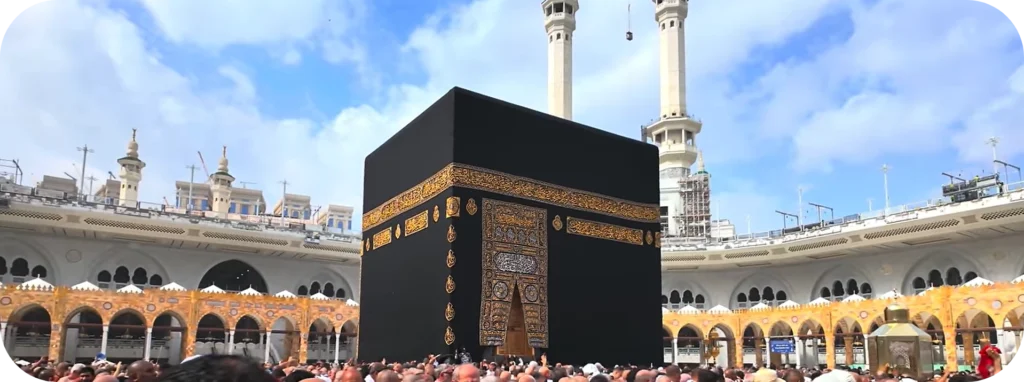
Umrah A Complete Guide to the Blessed Islamic Pilgrimage
Umrah is a sacred Islamic pilgrimage performed by Muslims to the holy city of Makkah. Unlike Hajj, which takes place on specific dates, Umrah can be performed at any time of the year. Millions of Muslims travel to Makkah each year to perform Umrah and seek spiritual purification and closeness to Allah.
What is Umrah?
Umrah is often called the “minor pilgrimage” in Islam. Although it is not obligatory like Hajj, it is highly recommended for Muslims who have the ability to perform it. The pilgrimage involves a series of sacred rituals carried out at the holy mosque known as Masjid al-Haram.
Key Rituals of Umrah
The rituals of Umrah are simple but deeply meaningful:
- Ihram – Pilgrims enter a sacred state of purity and intention before beginning the pilgrimage.
- Tawaf – Pilgrims walk seven times around the holy Kaaba as an act of devotion to Allah.
- Sa’i – Pilgrims walk seven times between the hills of Safa and Marwah, commemorating the search for water by Hajar (the wife of Prophet Ibrahim).
- Halq or Taqsir – Men shave or trim their hair, and women cut a small portion of their hair, marking the completion of Umrah.
Spiritual Importance of Umrah
Performing Umrah is a deeply spiritual experience. It allows Muslims to seek forgiveness, strengthen their faith, and reconnect with Allah. Many believers describe the journey as life-changing because of the peaceful atmosphere and the opportunity to worship in one of the holiest places on earth.
Best Time to Perform Umrah
Umrah can be performed at any time of the year, but many Muslims prefer visiting during Ramadan because prayers during this month carry greater rewards. However, due to large crowds, some pilgrims choose quieter months for a more peaceful experience.
Conclusion
Umrah is a beautiful act of devotion that brings Muslims closer to Allah. The journey to Makkah, the prayers at Masjid al-Haram, and the rituals around the Kaaba create a powerful spiritual experience that remains unforgettable for every pilgrim.
How to Perform Umrah Step by Step
Performing Umrah is a beautiful act of worship done in the holy city of Makkah at Masjid al-Haram.
Below is a simple step-by-step guide.
1. Enter the State of Ihram
Before reaching Makkah, pilgrims must enter the sacred state of Ihram at a designated Miqat.
- Make the intention (Niyyah) for Umrah.
- Recite the Talbiyah:
“Labbaik Allahumma Labbaik, Labbaik Laa Shareeka Laka Labbaik…” - Men wear two white cloths; women wear modest Islamic dress.
2. Perform Tawaf (Circumambulation)
When you arrive at Kaaba inside Masjid al-Haram:
- Begin from the corner of Hajar al-Aswad.
- Walk seven times around the Kaaba in an anti-clockwise direction.
- Make dua and remember Allah during Tawaf.
3. Pray Two Rak’ahs
After completing Tawaf:
- Pray two Rak’ahs of Salah near Maqam Ibrahim if possible.
- Drink Zamzam water and make dua.
4. Perform Sa’i
Next, perform Sa’i between the hills of:
- Safa
- Marwah
Steps:
- Walk seven times between Safa and Marwah.
- Begin at Safa and end at Marwah.
- Make supplications and remember Allah.
5. Halq or Taqsir (Hair Cutting)
After Sa’i:
- Men: shave the head (Halq) or trim hair (Taqsir).
- Women: cut a small portion of their hair.
This marks the completion of Umrah.
Summary of Umrah Steps
- Ihram (Intention and Talbiyah)
- Tawaf around the Kaaba
- Two Rak’ahs prayer
- Sa’i between Safa and Marwah
- Hair shaving or trimming
Hajj The Sacred Pilgrimage of Islam
Hajj is one of the Five Pillars of Islam and an important act of worship for Muslims. Every year, millions of Muslims from around the world travel to the holy city of Makkah to perform this sacred pilgrimage. Hajj is required once in a lifetime for every Muslim who is physically and financially able.
What is Hajj?
Hajj is an annual Islamic pilgrimage that takes place during the month of Dhul-Hijjah, the last month of the Islamic calendar. During this time, pilgrims gather in Makkah to perform a series of spiritual rituals that strengthen faith and devotion to Allah.
Main Rituals of Hajj
Hajj includes several important rituals performed over a few days:
- Ihram: Pilgrims enter a sacred state and wear simple white garments that symbolize equality and purity.
- Tawaf: Pilgrims walk seven times around the holy Kaaba inside Masjid al-Haram.
- Sa’i: Pilgrims walk seven times between the hills of Safa and Marwah.
- Standing at Arafat: Pilgrims gather at Mount Arafat for prayer and reflection, which is the most important part of Hajj.
Spiritual Importance
Hajj is a powerful journey of faith and unity. Muslims from different cultures and countries come together to worship Allah, showing the equality and brotherhood of the global Muslim community.
Conclusion
Hajj is one of the most meaningful spiritual journeys in Islam. It strengthens faith, encourages repentance, and brings Muslims closer to Allah. For many believers, performing Hajj is a life-changing experience filled with devotion and gratitude.
How to Perform Hajj Step by Step
Hajj is performed once a year during the Islamic month of Dhul-Hijjah in the holy city of Makkah. Below is a simple step-by-step guide to the main rituals of Hajj.
1. Enter the State of Ihram (8th Dhul-Hijjah)
Pilgrims begin Hajj by entering the sacred state of Ihram.
- Make the intention (Niyyah) for Hajj.
- Wear the Ihram garments (two white cloths for men; modest dress for women).
- Recite the Talbiyah:
“Labbaik Allahumma Labbaik…”
2. Go to Mina
Pilgrims travel to Mina and spend the day and night there in prayer and remembrance of Allah.
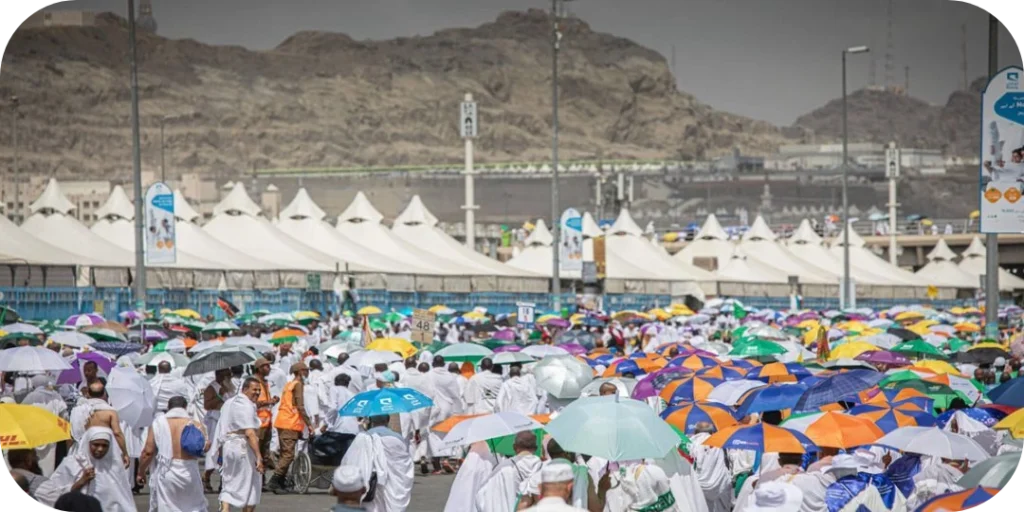
3. Day of Arafat (9th Dhul-Hijjah)
Pilgrims go to Mount Arafat.
- This is the most important part of Hajj.
- Pilgrims stand in prayer and make dua asking Allah for forgiveness.
4. Muzdalifah
After sunset, pilgrims travel to Muzdalifah.
- Pray Maghrib and Isha prayers.
- Spend the night there.
- Collect small stones for the next ritual.
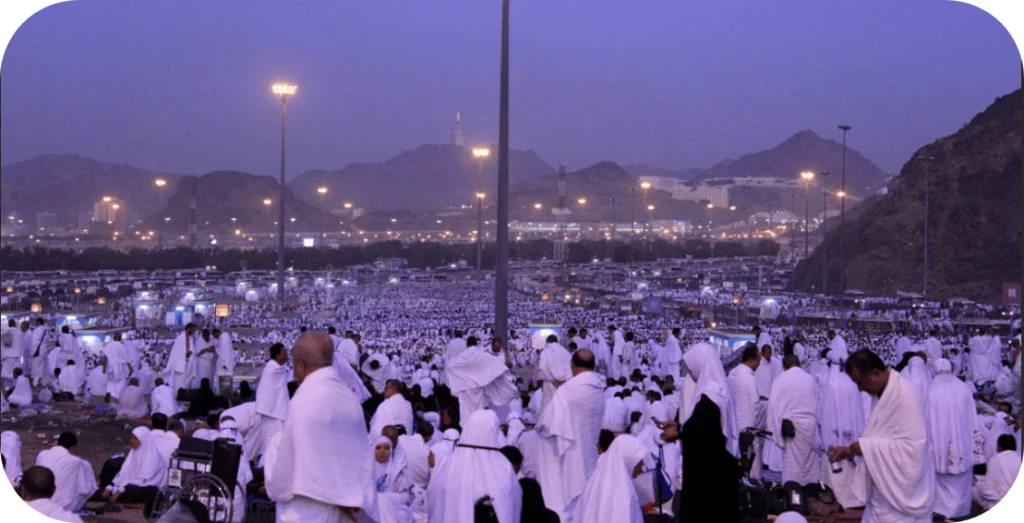
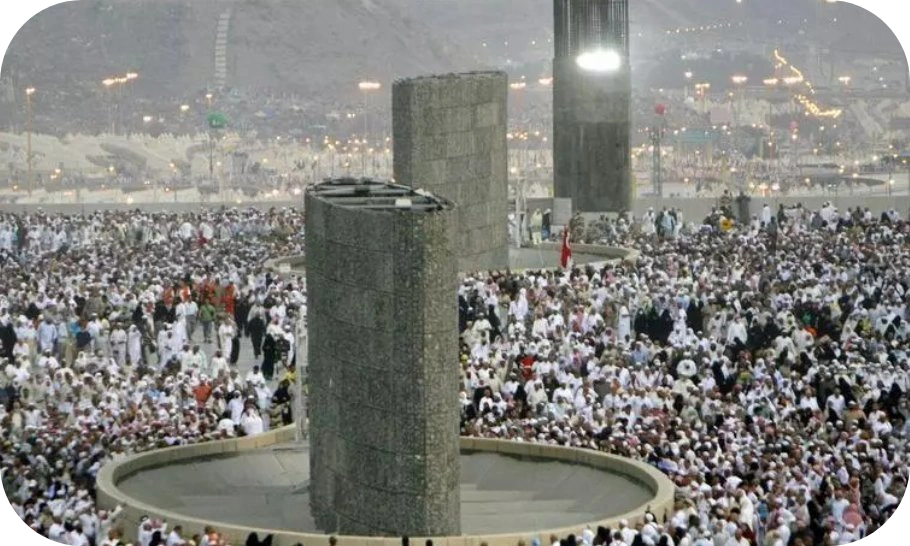
5. Stoning the Jamarat (10th Dhul-Hijjah)
Pilgrims return to Mina and throw stones at the pillar called:
- Jamarat
This act symbolizes rejecting evil.
6. Animal Sacrifice
Pilgrims perform the sacrifice (Qurbani) to remember the devotion of Prophet Ibrahim.
7. Hair Cutting
- Men: shave or trim the hair.
- Women: cut a small portion of hair.
8. Tawaf al-Ifadah
Pilgrims return to Masjid al-Haram and perform Tawaf around the:
- Kaaba
9. Sa’i (If Required)
Pilgrims walk seven times between:
- Safa
- Marwah
10. Final Days in Mina
For the next two or three days, pilgrims remain in Mina and continue the stoning of the Jamarat.
Summary of Hajj Steps
- Ihram and intention
- Stay in Mina
- Standing at Arafat
- Night at Muzdalifah
- Stoning the Jamarat
- Animal sacrifice
- Hair cutting
- Tawaf al-Ifadah
- Sa’i
- Final stoning in Mina